
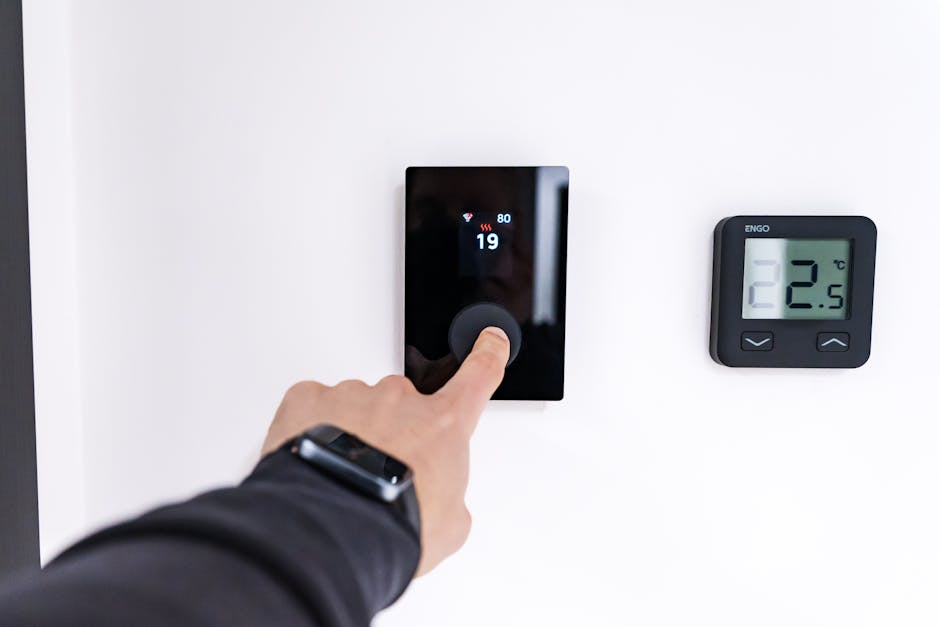

Are you constantly adjusting your home’s temperature, battling hot and cold spots, or dreading your monthly energy bill? It’s a common frustration for many Raleigh homeowners. Achieving consistent comfort while keeping utility costs in check can feel like a constant negotiation with your HVAC system. You want to be warm in winter and cool in summer, but not at the expense of your budget or peace of mind.
Traditional thermostats offer basic control, but they often require manual adjustments or complex programming that many people just don’t have time for. This can lead to wasted energy when you’re away or uncomfortable temperatures when you’re home. Imagine a world where your thermostat learns your preferences, knows when you’re home or not, and can even be controlled from your phone – all while optimizing your energy use.
That world is here, and it’s called a smart thermostat. At Parkside Plumbing & HVAC, we understand the desire for both comfort and efficiency. We’ve spent over 20 years helping homeowners like you in Raleigh keep their living spaces perfectly conditioned. Upgrading to a smart thermostat isn’t just about a new gadget; it’s a smart investment in your home’s long-term reliability and your family’s comfort. As we explain in our guide to AC efficiency tips for summer, small changes can make a big difference.
What Exactly Is a Smart Thermostat?
A smart thermostat is an internet-connected device that allows you to control your home’s heating and cooling system remotely, often via a smartphone app. Beyond remote control, these devices offer advanced features like learning algorithms, occupancy sensors, and energy usage reports to optimize your comfort and potentially lower your energy bills.
Unlike a basic manual or even a programmable thermostat, a smart thermostat brings a higher level of intelligence to your home’s HVAC control. It connects to your home’s Wi-Fi, allowing for a two-way flow of information. You send commands, and it sends back data on usage and performance. Many models, such as those from Nest or Ecobee, even have sensors that can detect if someone is home, adjusting temperatures accordingly without you lifting a finger. According to Energy Star, smart thermostats can save homeowners, on average, 8% on heating and cooling costs. That’s a noticeable difference. You can find more details on their official website.
How Do Smart Thermostats Work Their Magic?
Smart thermostats integrate various technologies to deliver their benefits. They typically use internal sensors to monitor ambient temperature, and some include external sensors to track occupancy or temperature in different zones of your home. Wi-Fi connectivity allows communication with your smartphone or other smart home hubs, enabling remote control and integration with voice assistants like Alexa or Google Assistant. Many also come with advanced scheduling features, geofencing, and even weather-aware programming, ensuring your system runs optimally.
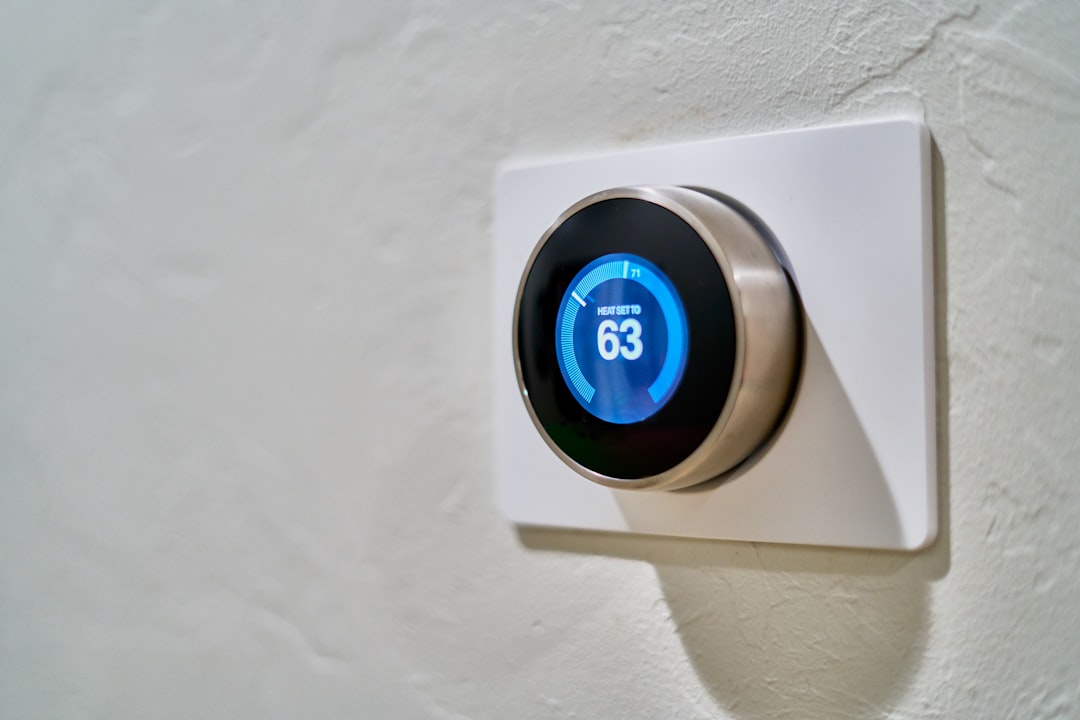
The “learning” aspect is a key differentiator. Brands like Nest are famous for this. Over time, these thermostats observe your habits—when you adjust the temperature, when you leave for work, when you typically return. They then create an optimized schedule automatically. This proactive approach ensures your home is comfortable when you need it to be, and energy isn’t wasted when you’re not there. This intelligent automation contributes significantly to the savings often displayed on the device itself.
“The true power of a smart thermostat lies in its ability to adapt and learn from your habits, seamlessly blending comfort with energy efficiency. It’s not just about setting a schedule; it’s about anticipating your needs.”
Where Is the Best Place to Put a Smart Thermostat?
The best placement for a smart thermostat is typically on an interior wall, centrally located within your main living area, away from direct sunlight, drafts, or heat sources. This ensures it accurately reads the ambient temperature of the space you use most, preventing misleading readings that could cause your HVAC system to cycle inefficiently.
Avoid placing your thermostat near windows, doors, or vents. These spots can give false temperature readings, making your system work harder than necessary. For example, direct sunlight can trick the thermostat into thinking the room is warmer than it actually is, causing the AC to run excessively. Similarly, if it’s too close to an outside door, a rush of cold air in winter could prompt the furnace to kick on unnecessarily. In our practice, we often recommend installing additional remote sensors in other rooms, especially if your home has significant temperature variations, to provide a more balanced overall reading.
Why Does My Thermostat Say Savings?
When your smart thermostat displays “savings,” it typically indicates the estimated energy or cost reduction achieved by its optimized scheduling and adaptive features compared to continuous, unmanaged heating or cooling. Many smart thermostats track your usage and compare it against baseline data or default settings to quantify how much energy you’re conserving by using its smart features, such as geofencing, learning algorithms, or away modes.
These savings aren’t just guesswork. Modern smart thermostats often come with sophisticated analytics that monitor your HVAC system’s run time, indoor and outdoor temperatures, and your set preferences. By comparing periods of optimized use with what would have been standard operation, the device calculates and displays these estimated savings. It’s a powerful motivator, showing you the tangible benefits of your upgrade. We find that homeowners who regularly review these reports are more engaged in finding ways to further optimize their home’s energy use, complementing efforts like a spring air conditioning tune-up.
What Are the Disadvantages of a Smart Thermostat?
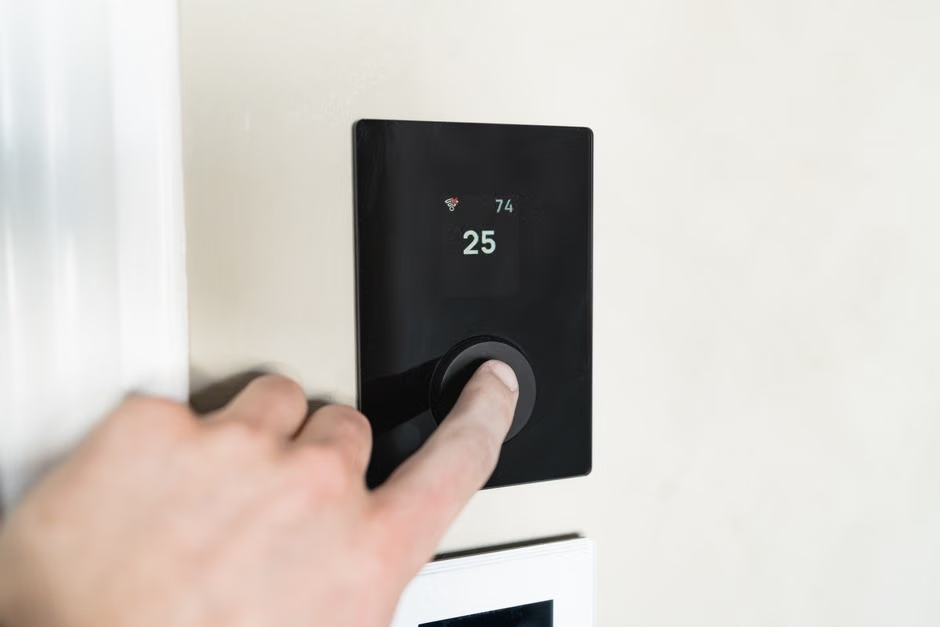
While highly beneficial, smart thermostats do have a few potential drawbacks. The initial cost can be higher than traditional models, and installation might require professional help, especially if your wiring is older or complex. Some users might find the advanced features and smartphone integration to have a slight learning curve, and reliance on Wi-Fi means a loss of smart functionality during internet outages. Data privacy is also a consideration, as these devices collect usage patterns.
For example, if you live in an area with unreliable internet, you might lose the ability to control your thermostat remotely during an outage. While the thermostat will still function as a basic programmable unit, you’ll miss out on the remote adjustments and smart scheduling that make it so convenient. Neil Henderson, who writes for Parkside Plumbing & HVAC, notes that “the benefits often outweigh these minor concerns for most homeowners, especially with professional installation ensuring everything works seamlessly from day one.” It’s also important to ensure compatibility with your existing HVAC system; not all older systems are immediately compatible, sometimes requiring a C-wire or other modifications.
What’s the Cheapest Temperature to Keep Your House At?
The “cheapest” temperature to keep your house at varies by season and personal comfort, but generally, for maximum savings, you should set your thermostat as high as comfortably possible in summer and as low as comfortably possible in winter. The U.S. Department of Energy suggests setting your thermostat to 78°F (26°C) in summer when you’re home and higher when you’re away, and 68°F (20°C) in winter when awake, dropping it lower (even to 60-62°F) when sleeping or away. This strategy minimizes the difference between indoor and outdoor temperatures, reducing your HVAC system’s workload and energy consumption.
Smart thermostats make implementing these temperature setbacks much easier through their scheduling and geofencing capabilities. Instead of manually adjusting the temperature every time you leave or go to bed, your smart thermostat can do it for you automatically. This consistent care can lead to significant savings over time. However, remember that comfort is key. Pushing the temperatures too far outside your comfort zone isn’t sustainable. The goal is to find a balance where you’re comfortable and saving money.
What Benefits Can Smart Thermostats Offer My Raleigh Home?
Smart thermostats offer a range of advantages that contribute to both comfort and efficiency in your home. They’re a smart investment that can truly transform how you manage your indoor climate.
- Energy Savings: Automated scheduling, geofencing, and learning algorithms reduce energy waste by optimizing heating and cooling based on occupancy and preferences.
- Remote Control: Adjust your home’s temperature from anywhere using your smartphone, ensuring comfort when you arrive home or adjusting for unexpected changes.
- Increased Comfort: Maintain consistent temperatures and eliminate hot or cold spots through intelligent sensors and zoning capabilities.
- Usage Reports: Gain insights into your energy consumption patterns, helping you identify opportunities for further savings.
- Smart Home Integration: Seamlessly connect with other smart home devices like lighting, security systems, and voice assistants for a unified experience.
- System Alerts: Receive notifications about potential HVAC issues, such as filter change reminders or system malfunctions, enabling early intervention.
Considering a Smart Thermostat? Suitability and Alternatives
While smart thermostats are an excellent choice for many, they’re not always the only solution. For homes with very stable schedules and minimal temperature fluctuations, a well-programmed traditional thermostat might suffice. If you have an older, less common HVAC system, compatibility could be an issue, though many modern smart thermostats are designed to work with a wide array of systems. For those who travel extensively or have unpredictable schedules, the geofencing and remote control of a smart thermostat become almost essential.
It’s important to match the technology to your lifestyle. If you’re rarely home, or if you prefer a completely hands-off approach, a smart thermostat’s learning capabilities will really shine. However, if you’re a creature of habit with a very fixed routine, an advanced programmable thermostat might offer sufficient control without the higher price point or the need for Wi-Fi connectivity. We always discuss your specific needs and home setup to recommend the best fit, whether it’s a smart thermostat, a simpler programmable model like those we cover in our thermostat programming tips, or even just an inspection of your existing system.
What to Expect After Installation: Results and Timeline
Once a smart thermostat is professionally installed, you can expect immediate access to remote control features and the ability to set up schedules. The deeper benefits, particularly the energy savings from its learning capabilities, will begin to materialize within a few weeks as the device gathers data about your habits and home environment. Within a month or two, you should notice a more consistent indoor climate and start seeing a reduction in your energy bills, especially during peak heating or cooling seasons.
Realistic results mean not expecting a drastic overnight reduction, but rather a gradual, sustained improvement in efficiency and comfort. We typically see a 10-15% reduction in heating and cooling costs for many Raleigh homeowners within the first year. Beyond the numbers, you’ll experience time-saving convenience. No more coming home to a stuffy house or forgetting to turn down the heat before leaving for vacation. It’s about a smarter, more responsive home that adapts to you.
Practical Tips for Maximizing Your Smart Thermostat’s Benefits
Getting the most out of your smart thermostat means more than just setting it and forgetting it. A few simple practices can significantly boost its effectiveness and your savings:
- Utilize Geofencing: Turn on location-based control (geofencing) so your thermostat automatically adjusts the temperature when you leave or approach home. This prevents heating or cooling an empty house.
- Review Energy Reports: Regularly check the energy usage reports provided by your thermostat’s app. This helps you identify trends and areas where you might further optimize settings.
- Install Remote Sensors: If your smart thermostat supports them, place remote sensors in rooms that tend to be hotter or colder than the main area. This ensures more even temperature distribution throughout your home.
- Integrate with Other Smart Devices: Link your thermostat with other smart home devices like smart lights or ceiling fans. For example, some systems can turn on fans when the AC runs, enhancing circulation.
- Keep Your HVAC System Maintained: A smart thermostat works best with an efficient HVAC system. Regular maintenance, such as annual tune-ups, ensures your furnace or AC is operating at its peak, allowing the thermostat to maximize savings.
- Don’t Override Constantly: Allow the thermostat to learn your preferences. Frequent manual overrides can hinder its ability to create an optimal, energy-saving schedule. Let it do its job.
Upgrading to a smart thermostat is more than just a home improvement project; it’s a step towards a more comfortable, efficient, and intelligent living space. At Parkside Plumbing & HVAC, we’re ready to help you explore the best smart thermostat options for your Raleigh home and ensure a professional installation. We offer skilled handling and guidance every step of the way, making sure your system is integrated perfectly for long-term comfort and savings. With over 20 years of experience, we’re your reliable professionals for keeping your home comfortable in every season. One call covers it all.